It’s easy to assume your vision is fine when you can clearly read street signs and see your phone screen. However, your eyes can develop serious conditions without any obvious symptoms. Often, by the time you notice changes, damage has already occurred.
A comprehensive eye exam is a thorough evaluation of both your vision and overall eye health that goes far beyond checking if you can read letters on a chart. Unlike basic vision screenings, these detailed exams at Dr. Chris Schell’s practice can detect eye diseases years before they affect your sight, potentially saving your vision and even your life.
Comprehensive Eye Exams vs. Basic Vision Screenings
That quick vision check you get at school or the DMV only tells you if you can see clearly at a distance. It’s like checking if your car starts without looking under the hood — you might miss serious problems brewing beneath the surface.
A comprehensive exam evaluates the entire health of your eyes. Your Barrie eye doctor examines the internal structures, measures eye pressure, and checks for diseases that can develop without symptoms. While a screening takes just a few minutes, a thorough exam typically lasts 30 to 60 minutes and includes multiple specialized tests.
Vision screenings use a simple pass/fail approach, but comprehensive exams provide detailed measurements and early detection of conditions like glaucoma, diabetic eye disease, and macular degeneration. If you experience persistent discomfort from screen use, glasses can help tired eyes by addressing vision issues that basic screenings might miss.
What Happens During Your Comprehensive Eye Exam
A comprehensive exam involves several steps to thoroughly evaluate your vision and eye health. It can look slightly different for each person, as we need to focus on your specific needs, but here are some of the tests you can expect:
Pre-Exam Health History and Discussion
Your appointment begins with a friendly chat about your family’s eye health history. Conditions like glaucoma and macular degeneration often run in families, so this information helps us accurately assess your risk factors.
We want to hear about any current concerns, such as headaches after computer work, difficulty seeing at night, or frequent dizziness, as these provide important clues. We also review your current medications and supplements, since some can affect your eyes or interact with the eye drops we use during the exam.
Visual Function Tests
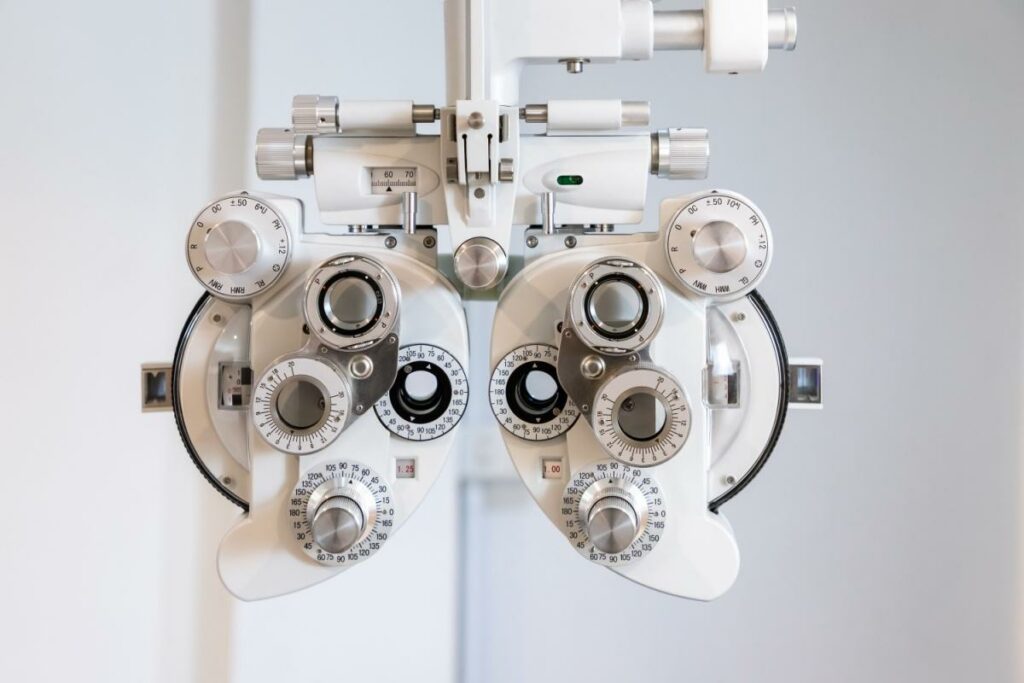
The familiar eye chart measures how clearly you see at different distances, but that’s just the beginning. We can also test your peripheral vision, colour perception, and how well your eyes work together as a team.
Eye Pressure Measurement
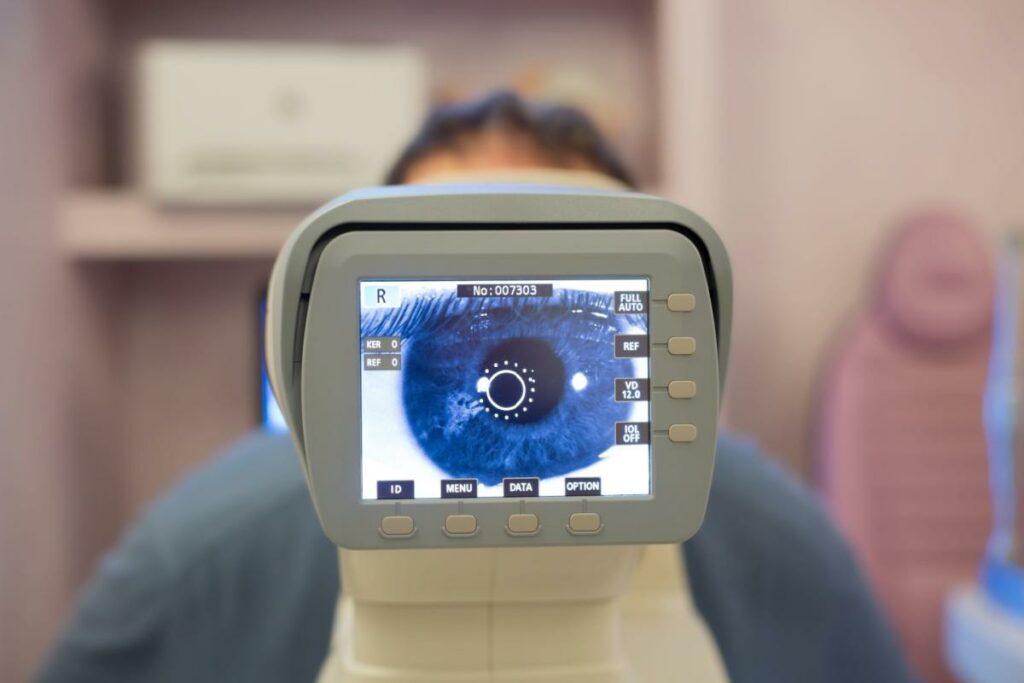
Eye pressure measurement checks for signs of glaucoma using a quick test. High pressure inside your eye can damage the optic nerve over time, often without you noticing any symptoms until significant vision loss occurs.
Dilated Pupil Exam
During the dilated pupil examination, we use special drops to temporarily widen your pupils so we can look inside your eyes. This gives us a clear view of your retina, optic nerve, and blood vessels, as these are the exact areas where many serious eye diseases first appear.
Eye Conditions Your Optometrist Can Detect
During your visit, we may look for several specific conditions to keep your eyes on the right track:
- Glaucoma: Often called “the silent thief of sight,” glaucoma usually develops without warning signs. Your exam can detect increased eye pressure and optic nerve changes years before you notice any vision problems, allowing for early management.
- Retinal Conditions: A detailed retinal examination can reveal signs of diabetic eye disease and macular degeneration in their earliest stages. Early detection allows for interventions that help protect your sight.
- Everyday Comfort Issues: We also identify changes in your glasses or contact lens prescription, dry eye syndrome, and other conditions that affect your daily comfort. If you experience persistent dryness or irritation, a dry eye exam helps us identify the root cause and guide your treatment.
How Often Do You Need a Comprehensive Eye Exam?
The right frequency for your comprehensive eye exams naturally shifts as you and your family move through different stages of life. Here is a general schedule you can follow:
Children & Teens
Your child should have their first comprehensive eye exam by 6 months of age to check for proper eye development. Many vision problems that affect learning are easier to treat when caught early.
We recommend annual eye exams for school-age children, especially during periods of rapid growth. We purposely design children’s eye exams to detect issues that can impact learning and development.
If your child already wears glasses or contact lenses, frequent visits keep their prescription current as their eyes grow and change.
Adults & Seniors
Healthy adults typically need comprehensive eye exams every 2 years, though your optometrist might recommend annual visits if you have risk factors like diabetes or a family history of eye disease.
After age 65, annual exams become more important as age-related eye conditions become more common. Your risk for glaucoma, macular degeneration, and cataracts increases significantly during these years.
If you have diabetes, high blood pressure, or take medications that affect your eyes, we might suggest more frequent monitoring regardless of your age. Diabetic eye exams, for example, help us detect complications before they affect your vision.
Preparing for Your Eye Exam
To get the most out of your visit, we recommend a few quick preparations. First, bring your current glasses and contact lenses to the appointment. Even if your prescription is outdated, this helps us understand how your vision has changed over time.
Make a list of all medications you take, including over-the-counter supplements. Some medications can affect your eye health or interact with drops used during the exam, so complete information helps your safety.
Finally, pack your sunglasses! If we dilate your pupils, the drops make your eyes sensitive to light for several hours, and sunglasses keep your eyes comfortable when you step back outside. If you’re looking to update your style, you can browse our quality protective sunglasses to keep your eyes comfortable after your exam.
Protect Your Family’s Vision Today
Taking the time for a thorough eye exam is a proactive way to protect your overall health and uncover hidden issues before they affect your sight. Don’t let another year pass without protecting your family’s vision. Dr. Chris Schell and the team provide comprehensive eye exams that give you peace of mind about your eye health.
Schedule your appointment today to help keep your eyes feeling and seeing their best for years to come.