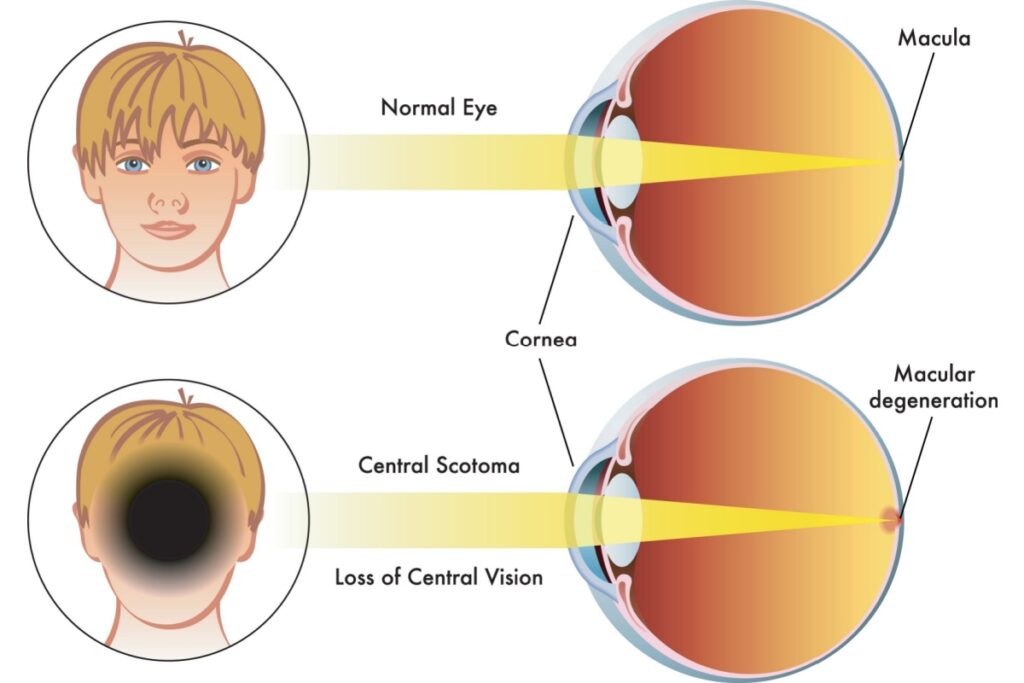
The effects of macular degeneration can start slowly. You might notice it when looking at a family photo and the faces in the centre seem a little fuzzy, but the background is clear. Or perhaps you see that straight lines, like a doorframe or telephone pole, suddenly look wavy. These experiences can be related to a common eye condition that impacts central vision.
Macular degeneration is an eye condition that affects the macula, a small part of your retina, which makes it more difficult to see fine details clearly. It’s the leading cause of severe vision loss and can lead to legal blindness, even if some of your peripheral vision remains. Your optometrist can help you learn more and look for early warning signs during an eye exam.
How Macular Degeneration Affects Your Central Vision
Think about looking at a clock. With macular degeneration, you might see the numbers around the edge perfectly, but the hands in the middle become blurry or even seem to disappear. This happens because the macula, the part of your eye responsible for sharp, straight-ahead vision, starts to thin or get damaged.
Because age is a significant factor in macular degeneration, you may hear it generally referred to as AMD (Age-Related Macular Degeneration) even when age isn’t the only cause of your vision loss.
The 2 Main Types of Macular Degeneration
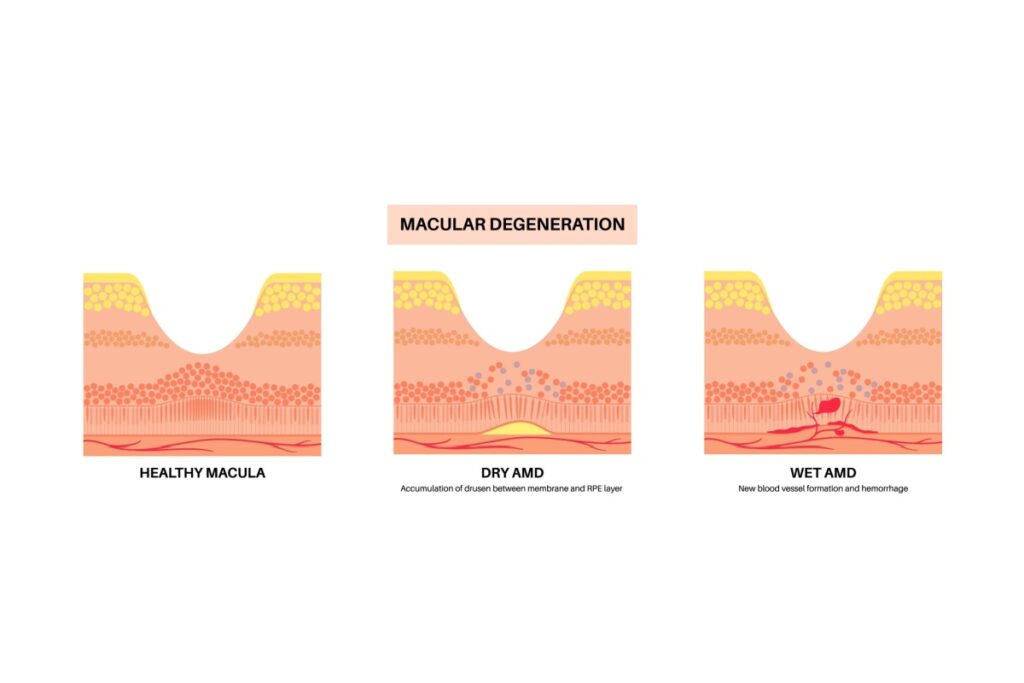
There are 2 main types of macular degeneration that both affect your central vision, but have different treatments and develop in slightly different ways. These types are dry and wet macular degeneration.
Dry Macular Degeneration
Dry form is the more common type of macular degeneration and typically develops slowly over time. Your macula thins, and tiny yellow deposits called drusen can build up underneath it. You might notice your vision change very gradually, making it hard to spot at first.
Wet Macular Degeneration
Although less common, the wet form is more serious and can progress faster. It occurs when new, abnormal blood vessels grow under your retina and leak fluid. This leakage can cause more noticeable and rapid changes to your central vision.
Early Signs and Symptoms to Notice
You may not notice any changes in the earliest stages of macular degeneration, which is why regular eye exams are an important part of your health routine. As the condition develops, you might experience:
- Blurry or fuzzy spots in your central line of sight
- Straight lines that appear wavy or bent
- More difficulty with vision in dim lighting
- Trouble recognizing faces clearly
- Colours that seem less bright or vibrant than before
While symptoms like wavy lines might seem similar to other conditions like astigmatism, their cause is very different, making an accurate diagnosis important.
Factors That May Increase Your Risk
Age is a significant factor in the development of macular degeneration. However, other elements can also play a role in your eye health. These include:
- A family history of the condition
- Smoking
- High blood pressure
- A diet that includes a lot of saturated fat
Treatments for Macular Degeneration
Treatments for macular degeneration depend on the cause and stage of your condition.
In the early stages of dry macular degeneration, a specific vitamin and mineral formula called AREDS2 may be recommended to prevent progression. You can also monitor your vision at home with an Amsler grid, a simple chart that helps you spot new wavy or blurry lines.
In wet macular degeneration, vision loss can occur more quickly. This often requires prompt anti-VEGF therapy to reduce the growth of abnormal blood vessels and may even reverse recent vision loss.
Regular check-ups with your optometrist are key to diagnosing changes early. An optometrist can detect the first signs of macular degeneration, often before you notice any symptoms yourself.
How to Protect Your Vision
Simple daily habits can help support your overall eye health. You can focus on a diet full of leafy greens and fish while limiting foods high in saturated fats, such as certain meats and butter. Antioxidants such as vitamins C and E can help keep your eyes healthy. It’s also helpful to protect your eyes from UV light with a quality pair of sunglasses whenever you are outside.
Your vision connects you to the world, and keeping your eyes healthy is an important part of your overall well-being. If you have questions about your vision or it’s time for a check-up, schedule your next appointment with the team at Dr. Chris Schell.