
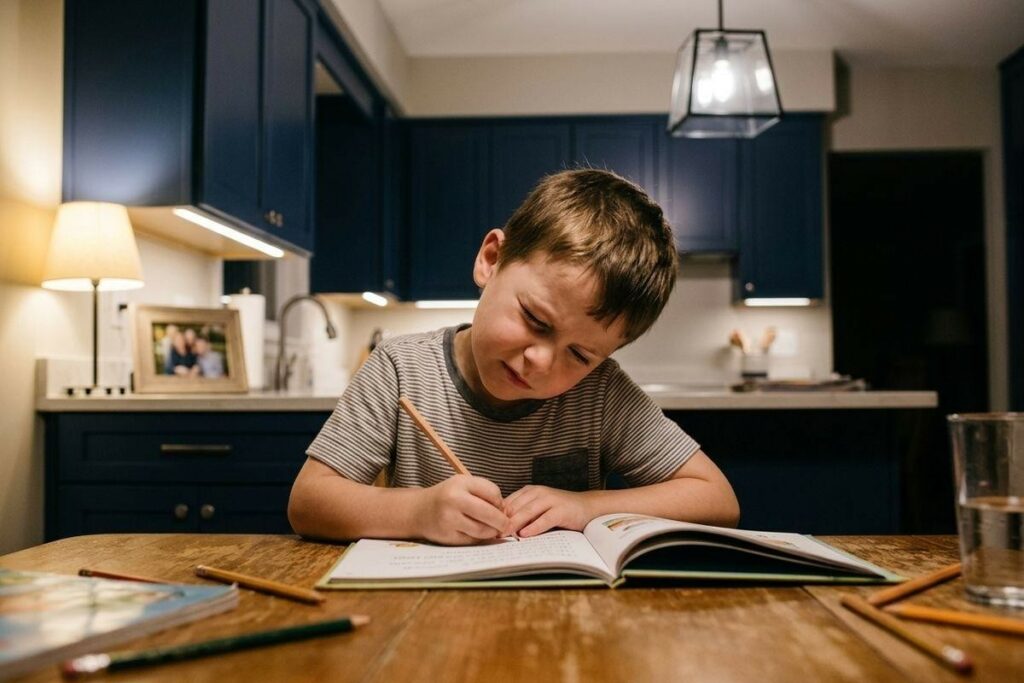
Kids face huge visual demands in the classroom every day. That means even if your child passed the school vision screening, they could still struggle to get through a page of reading without losing their place. Standard vision screenings check acuity, but they don’t catch everything. A child might have 20/20 vision but still need vision therapy to treat underlying issues with eye coordination, tracking, and focusing.
Vision therapy is a structured, personalized program that supports visual skills such as eye teaming, tracking, and focusing. Think of it as physiotherapy for your child’s visual system: guided exercises are chosen based on what their exam shows, so no two plans look exactly alike.
Spotting Vision Struggles During Reading
Reading and close-up work put a real demand on the visual system. Tasks become exhausting quickly if the eyes fail to work together properly. Look out for these patterns during homework or quiet reading time:
- Skipping lines or losing their place while reading
- Frequent headaches after close-up work like reading or writing
- Avoiding books, screens, or homework without an obvious reason
Recognizing Physical Clues
Sometimes the signs show up in how your child holds their body, not just in their performance. These physical habits are often your child’s way of compensating for what their eyes aren’t doing on their own.
Pay attention to these physical signs:
- Tilting the head to see clearly
- Closing 1 eye to focus
- Rubbing eyes constantly during visual tasks
- Losing attention quickly when looking at close-up details
A child who seems distracted or uninterested in reading might actually be fatigued from the effort it takes just to keep the words from blurring. A timely eye exam can identify whether a visual issue is contributing and what kind of support makes sense.
How Vision Problems Can Affect Learning
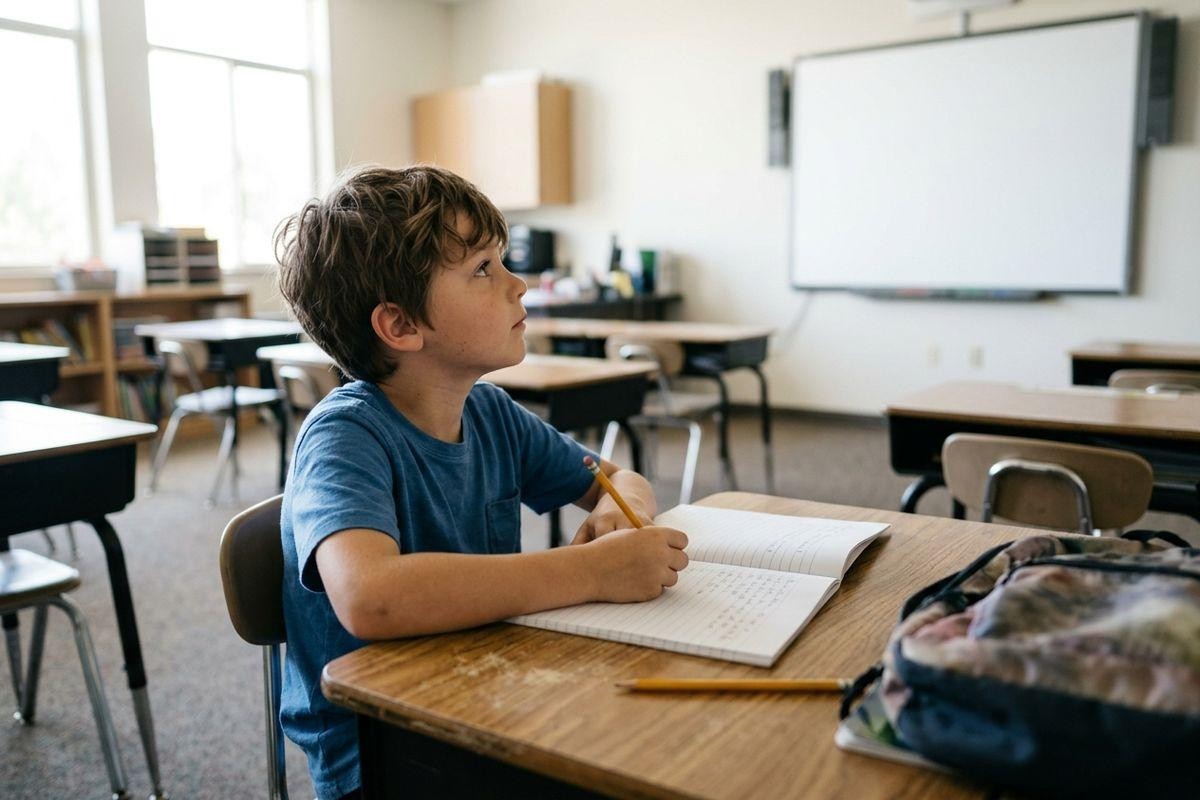
If your child’s eyes aren’t tracking smoothly across a page, reading fluency takes a hit. They may re-read the same line multiple times without realizing it, or skip words and lose the thread of what they’re reading. Copying from a board or screen is another common struggle, since it requires the eyes to repeatedly shift focus between 2 distances.
Some children describe letters or words that seem to move, shift, or go blurry mid-sentence. That experience is disorienting and tiring. Over time, it can chip away at a child’s confidence in school, even when they’re working hard and trying their best.
What Happens During a Comprehensive Eye Exam
A children’s eye exam does much more than just check for clear vision. The process is calm and child-friendly, and it’s designed to put kids at ease from the moment they walk in.
Here’s what an eye exam looks like:
- Eye coordination, tracking, and focusing ability are all assessed
- The exam is paced to keep your child comfortable throughout
- Results give the doctor a clear picture of whether vision therapy could help
Discussing the Next Steps
Once the exam is complete, our team takes the time to walk through the findings with you clearly and without the medical jargon. You’ll leave with a solid understanding of what’s going on and what the options are.
Depending on the results, we may recommend a few different paths:
- Glasses or contact lenses may be recommended if a prescription is needed
- Vision therapy may be suggested alongside or instead of corrective lenses
- Follow-up care is planned around your child’s schedule and specific goals
Help Your Child Succeed in the Classroom and Beyond
You don’t need to wait until things get worse. If any of the signs above are showing up regularly in your child’s day-to-day life, that’s reason enough to schedule a visit with your eye doctor. A few other situations that call for a check-in sooner rather than later include:
- Your child’s teacher has flagged reading difficulties or attention concerns
- Your child hasn’t had a thorough eye exam in the past year
- Any of the physical or behavioural signs above are happening consistently
Recognizing a visual issue early means your child spends less time struggling and more time learning. Trust your gut if you notice consistent reading difficulties or changes in behaviour.
Schedule a comprehensive eye exam to better understand your child’s visual skills and what support may help. Reach out to Dr. Chris Schell and our team today to book your next appointment!