
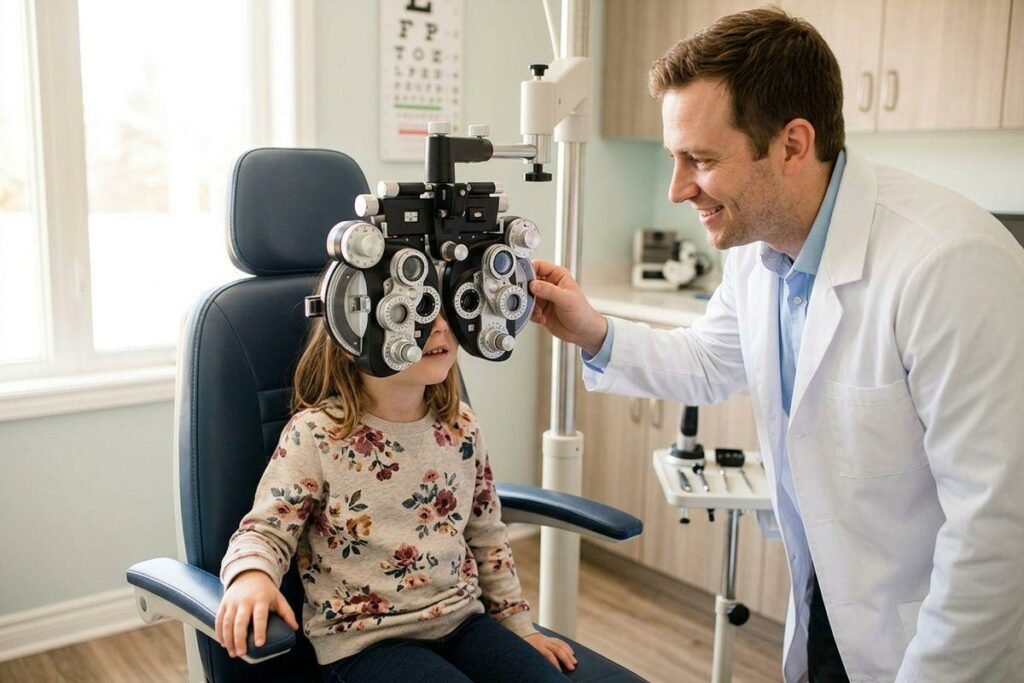
“Lazy eye” makes it sound like a child just isn’t trying hard enough, but that’s not what’s actually happening. The proper term is amblyopia, and it’s one of the more common causes of vision trouble in kids.
Amblyopia develops when the brain and one eye stop working as a team, so the brain leans on the stronger eye while vision in the weaker one falls behind. It usually starts early, often before a child even notices their eyes see the world a little differently, so it plays out quietly in the background.
That’s part of what makes regular children’s eye exams so important. Find amblyopia while a child is still young, and the eyes and brain get a much better shot at learning to work together, since an optometrist trained in pediatric eye care knows exactly what to look for.
Signs to Watch for in Your Child
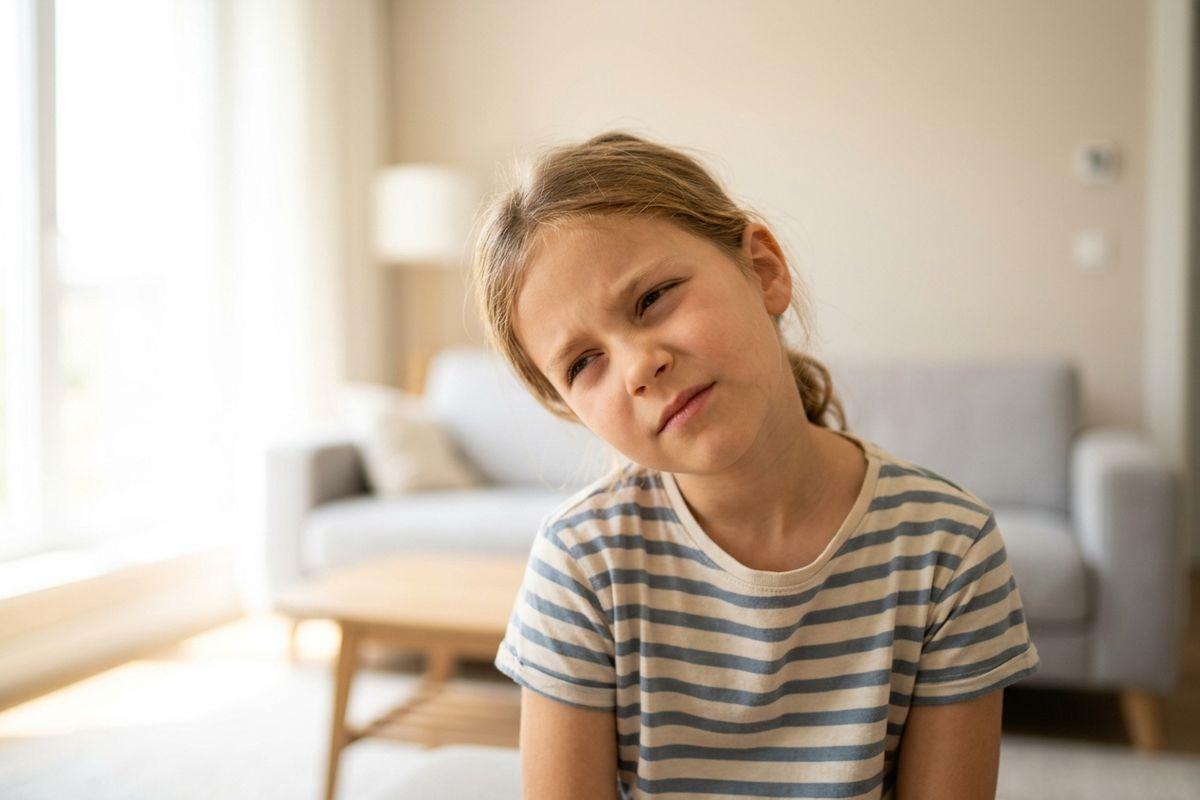
Kids rarely complain that their vision looks off. Most figure everyone sees the world the same way they do, so pay attention to how your child looks at things rather than waiting for them to say something.
Keep an eye out for these habits:
- Squinting or covering one eye to bring things into focus
- Tilting the head to see an object more clearly
- Bumping into furniture or misjudging how far away something is
- Avoiding activities that need good depth perception, like reaching for a toy or navigating stairs
Why Amblyopia Slips Under the Radar
Amblyopia often shows no obvious symptoms at all. A child can read, play, and run around like normal while one eye quietly does less of the work.
That’s why so many cases turn up during a routine eye exam rather than at home. A comprehensive exam checks each eye on its own, revealing differences a parent could never spot from across the room.
Amblyopia vs. Strabismus: What’s the Difference?
People often mix these two up, and it’s easy to see why. Strabismus refers to eyes that don’t line up properly, while amblyopia refers to reduced vision in one eye.
Here’s the connection: strabismus can cause amblyopia, but it isn’t the only cause. A child can have amblyopia with perfectly straight-looking eyes, which is exactly why it goes unnoticed so often.
What Causes Amblyopia
Amblyopia usually comes down to something that keeps one eye from sending a clear, focused image to the brain. When the two eyes send mismatched signals, the brain starts tuning out the weaker one.
A few common culprits include:
- An eye muscle imbalance that leads to crossed or wandering eyes
- A refractive error, where one eye is noticeably more nearsighted or farsighted than the other
- A cataract that blocks light from reaching the eye clearly
Who’s More Likely to Develop It
Any child can develop amblyopia, but some face higher odds than others. Watch a little closer if any of these apply:
- Premature birth or a lower birth weight
- A family history of amblyopia, strabismus, or other eye conditions
- A noticeably stronger prescription in one eye compared to the other
- An eye condition present from birth, like a pediatric cataract
How Treatment Works
Treatment focuses on getting the weaker eye and the brain back in sync, and it fits into everyday routines more easily than a lot of parents expect. Treatments may include:
- Correct the underlying problem first, whether that’s a muscle imbalance, a refractive error, or a cataract.
- Fit the weaker eye with glasses or contact lenses to sharpen its focus.
- Patch or use drops on the stronger eye so the weaker eye has to pick up more of the work.
Some kids notice sharper vision within a few weeks of consistent patching or drops. Full progress usually takes several months, so stick with the routine even when it feels slow going.
When to Book an Eye Exam
Timing matters with amblyopia. Book a first screening between ages 3 and 5, since treatment tends to work best while the visual system is still developing.
Book sooner if you notice a wandering eye or any of the habits mentioned above. An eye exam can pick up on subtle differences, like a slight turn in one eye or an unequal prescription, well before they become obvious at home.
Give Your Child’s Eyes a Head Start
Amblyopia is common, manageable, and easy to miss without a proper exam. Dr. Chris Schell and the team welcome families of all ages for warm, thorough eye exams built around real conversations, not just checklists. Book an appointment today and take the next step for your child’s vision.