
Key Takeaways
- Convergence insufficiency happens when your eyes struggle to work together for close-up tasks like reading.
- Headaches, blurry or double vision, and tired eyes are common signs, especially in kids.
- School vision screenings often miss it, so a full eye exam matters.
- Eye exercises, glasses with prism, and follow-up visits can help improve symptoms.
How Convergence Insufficiency Affects Your Eyes
You sit down to read, and within minutes the words start to swim. That frustrating feeling can happen when your eyes have trouble teaming up for close work.
Convergence insufficiency is a common eye coordination problem where your eyes can’t work together comfortably for near tasks. This leads to eye strain, blurred vision, and headaches. Our team at Dr. Chris Schell often sees this condition in kids and young adults.
The good news is that it’s treatable, and small changes can make reading feel easier again.
Signs & Symptoms to Watch For
The signs of convergence insufficiency can be easy to brush off as tiredness or a bad mood. Over time, however, a pattern tends to appear. Common symptoms include:
- Headaches during reading or screen time
- Double or blurry vision when looking at something up close
- Tired, sore eyes and trouble keeping focus
What It Feels Like for Your Child
Children rarely complain about vision issues. Instead, their actions point to a possible problem. For example, your child might complain that words seem to float or move across the page, you may notice them squinting often, or they may have a tendency to rub their eyes. They may also try to avoid activities that take a lot of focus, like homework.
Why Convergence Insufficiency Happens
The root of the problem sits in the connection between the muscles that move your eyes and the nerve signals that guide them. When those signals fall out of sync, your eyes have a hard time converging.
Family history often plays a role. In some cases, however, convergence insufficiency appears after a head injury or concussion due to the coordination between the eyes and brain getting disrupted.
How a Barrie Optometrist Diagnoses Convergence Insufficiency
Convergence insufficiency often slips past school screenings, since these checks usually only measure how well a child sees letters on a chart. The results of a screening can be good even when a child struggles to focus.
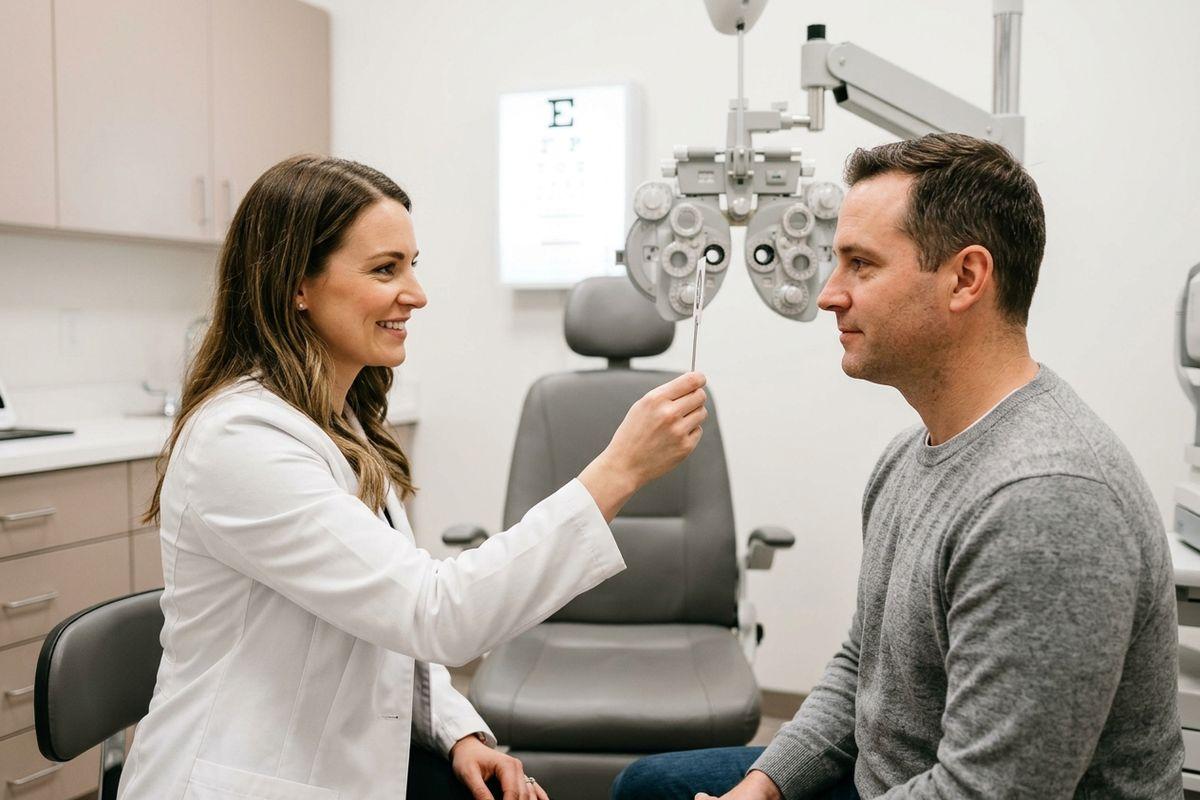
An eye exam digs deeper. As your Barrie optometrist, we’ll check how the eyes work together at reading distance, not just far away. We’ll also test for double vision and look at how well the eyes work together. This helps us pin down the source of the problem.
Treatment Options That Help
Once a diagnosis is made, we can design a plan to help. Most people start with simple, low-cost steps.
- In-office eye exercises paired with short home practice to train your eyes to team up
- Prism glasses designed to align vision.
- In rare cases, surgery may be an option.
What to Expect with Eye Exercises
To help with convergence issues, we often recommend exercise-based treatments like vision therapy. Think of it as a workout for the muscles that help control your eyes.
Treatment involves short daily sessions at home, usually for just a few minutes at a time. Many people notice symptoms improve over several weeks as the eyes learn to work together. Follow-up visits keep progress on track and help us adjust the process as needed.
Ready for Clearer, More Comfortable Reading?
If reading, screens, or homework leave your eyes tired and sore, Dr. Chris Schell and team can help you find answers. A thorough eye exam checks how your eyes work together and points you toward care that fits your family. Book your Barrie eye exam today, and take the first step toward easier focus.